

Play Therapy for Children in Denver Colorado
Child-Centered Therapy for Emotional Regulation, Anxiety, & Big Feelings
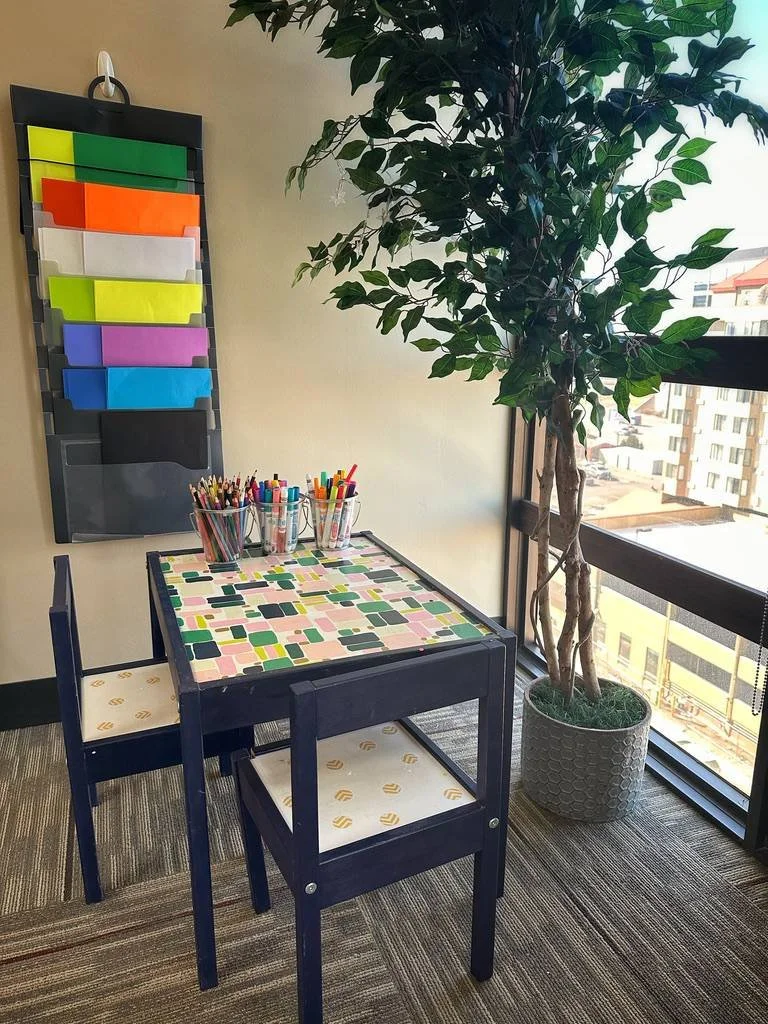
Is your child struggling with big feelings, anxiety, or behavior that seems out of control?
Have tantrums, emotional shutdowns, or school challenges become more frequent?
Are you looking for a therapist who understands children and can support them through play—not pressure?
I’m a Registered Play Therapist and Licensed Clinical Social Worker in Denver, Colorado, offering Child Play Therapy to help kids express emotions, build emotional regulation skills, and heal through the language of play.
In a warm, nonjudgmental environment, children are supported in ways that feel natural, safe, and developmentally appropriate. Through toys, storytelling, art, sand tray, and imagination, kids learn to process what they can’t yet put into words.
If You’re Worried About These Things…You’re Not Alone
Parents often share concerns like:
“Meltdowns, shutdowns, or outbursts are becoming more frequent.”
“Transitions, mornings, or bedtime are a battle every day.”
“School is calling more often about behavior or emotional issues.”
“We tiptoe around certain topics to avoid explosions.”
“Nothing I try seems to work anymore.”
These are normal. Truly.
Our work together is about creating safety, understanding, and a path forward. In play therapy, children don’t need to talk on command to grow. Play is their communication. Emotional behaviors are seen as information, not misbehavior.
Many parents come to play therapy feeling worried, overwhelmed, or unsure if they’re “doing it right.” If that’s you, you are already in the right place. You don’t need to have the perfect words or a perfectly behaved child to begin. You just need to be here.
Play therapy is a developmentally-appropriate, research-supported approach that helps children express emotions, build emotional regulation skills, and heal through the language of play.
In a world where kids are often asked to “use their words before they’re ready,” play gives them another path. It lets them show us how they feel, instead of forcing it.
What to Expect in Play Therapy
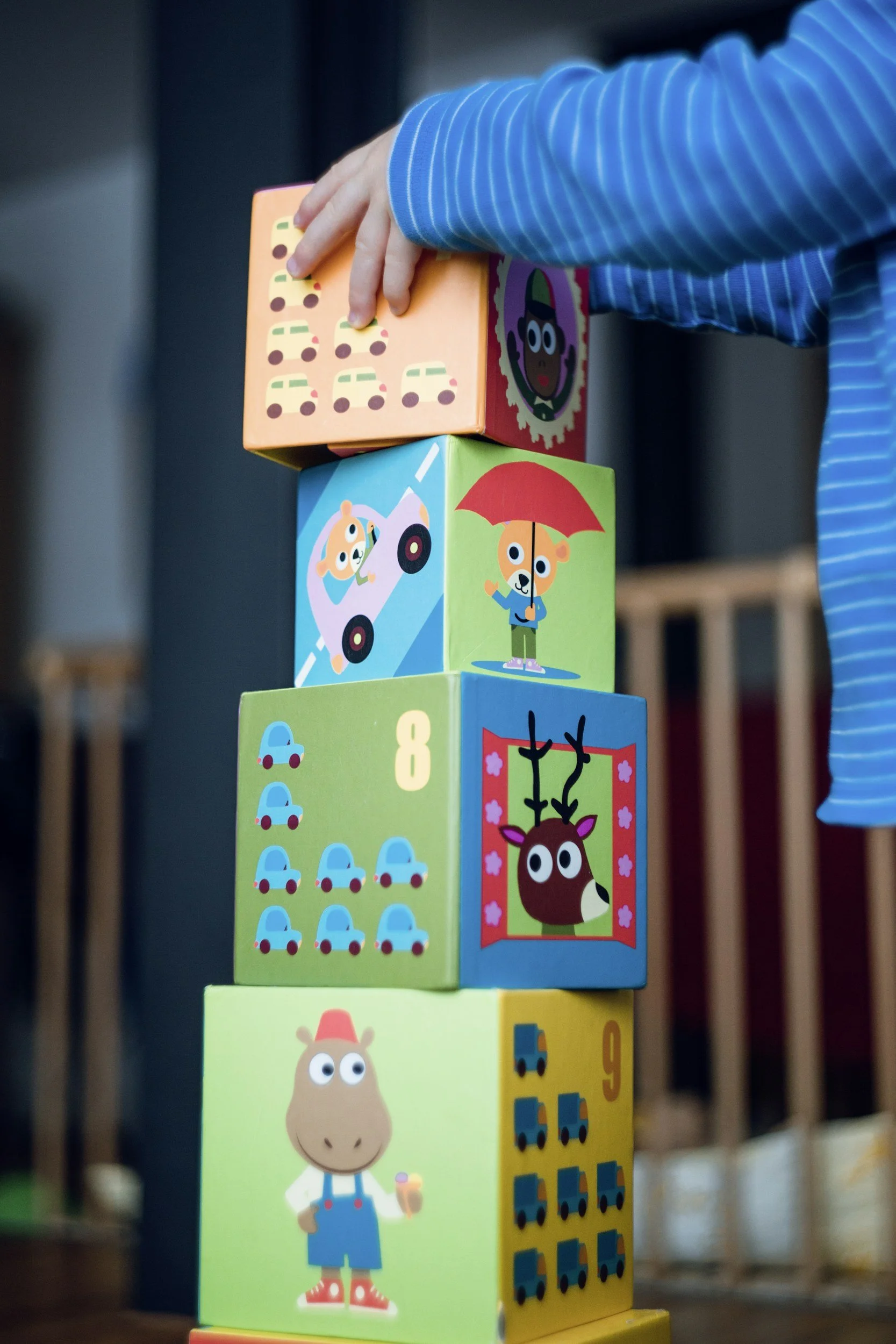
What Sessions Look Like
A typical course of play therapy includes:
Consultation Call – We talk through concerns, hopes, and goals.
Parent Intake Session – You share your child’s story; we create a plan together.
Weekly Play Therapy Sessions – Child-led expression, emotional skill-building, and healing through play.
Parent Check-Ins – Brief updates, coaching, and tools you can use at home.
Review & Next Steps – Celebrating growth and planning ahead.
Some children jump right in. Some need time to warm up. Both are okay. There is no “right way” for a child to be here.
Play Therapy Is:
A structured, evidence-based therapy model
A way for kids to process feelings through play, art, and imagination
A space for emotional regulation, problem-solving, and connection
Supportive, trauma-informed, and attachment-focused
Rooted in respect, dignity, and the belief that children are doing the best they can
Play Therapy Is Not:
Just playing with toys
Behavior management or discipline
About identifying “the bad guy” in a family
Forcing a child to talk before they feel safe
A reflection of your worth as a parent
Many parents arrive to play therapy feeling unsure, overwhelmed, or afraid they’re “doing something wrong.” If that’s where you are, you are welcome here. You don’t have to know what to say or have everything figured out — your presence is already a meaningful first step.
In play therapy, you are a partner, not a bystander. Your role is to stay curious, stay open, and show up for your child in the ways that feel doable. Therapy is not about judging you or deciding who is right or wrong; it’s about supporting your relationship with your child and building skills that make life feel more manageable.
Your Role as a Parent in the Play Therapy Process
Understanding Parent Reactions With Compassion
In play therapy, we recognize that your nervous system matters too.
A child’s big feeling can trigger your big feeling.
A child’s shutdown can trigger your helplessness.
A child’s anger can trigger your fear of being judged or failing.
This is not a sign you’re doing it wrong.
It’s a sign you’re human.
Together, we learn:
why certain behaviors hit a nerve
where emotional overwhelm lives in the body
how your history might whisper into present moments
what co-regulation looks like in real life, not theory
how to repair connection when things go sideways
This is trauma-informed parenting support, not behavior micromanagement.

What Collaboration Looks Like
You are part of the therapeutic team. That means:
You’ll receive regular check-ins, not silence.
You’ll get language to use at home when feelings get big.
You’ll be offered tools that support connection before correction.
You’ll learn how to set boundaries that don’t break relationship.
You’ll be guided, coached, and supported — not evaluated.
Recent Posts About Play Therapy


Frequently Asked Questions About Play Therapy
-
Play therapy typically supports children ages 3–12.
Teens may benefit from a blend of expressive therapies, talk therapy, and skill-building depending on their needs. -
That’s more common than you think — and it’s okay.
Some children need time to warm up before engaging; others communicate entirely through play. The focus is on creating safety and connection first. Progress begins with trust, not performance. -
There’s no one-size-fits-all timeline.
Many families begin with weekly sessions and reassess every 8–12 weeks. The length of therapy depends on:Child’s goals & nervous system needs
Complexity of symptoms or history
Parental involvement & support outside session
Transitions, school stress, or ongoing changes
Progress is reviewed and celebrated together.
-
No — I do not offer telehealth play therapy for children.
Because play therapy is rooted in nervous system regulation, sensory engagement, and the therapeutic power of co-regulation, I believe children benefit most from being physically in the room. In-person sessions allow for:shared regulation and connection
sensory + movement-based play
safe relational cues through body language, rhythm, pacing, and presence
access to the full playroom environment (toys, art, sand tray, imaginative storytelling)
-
I current accept Denver Medicaid, Aetna, and Kaiser Insurance. If you have a plan I do not accept, I can provide a superbill. This is a document you would submit directly to your insurance for partial reimbursement.
-
Play therapy sessions are $160 per session. This rate reflects the specialized training and clinical experience required to provide developmentally-appropriate, trauma-informed, and relationally focused therapy for children. It also includes the time spent outside the session for treatment planning, parent communication, clinical documentation, and coordination of care when needed.
Still Have Questions?
If you’re unsure where to start, that’s okay.
A consultation call is a no-pressure space to explore options.